The project
Habitcalm is a habit app for a quieter day. The right habits show up at the right time, a missed day does not wipe a streak, and a reminder reads like a short note.
I designed and built the Habitcalm marketing website. It is live at habitcalm.pages.dev.
The page is the product. A visitor lands on “Build habits that actually stick,” then moves through how a day is laid out, who it is for, the numbers, and the suggestions that adjust the routine.
The challenge
The promise is a day that never feels crowded. The site still has to explain a lot: flexible streaks, a planner that changes with the hour, routine stacks, a weekly reflection, gentle reminders, four kinds of day, and suggestions that learn a pattern.
That explanation has to stay as calm as the app. On a phone, the headline, the two actions, and the routine on the screen have to keep the same order.
Design and development
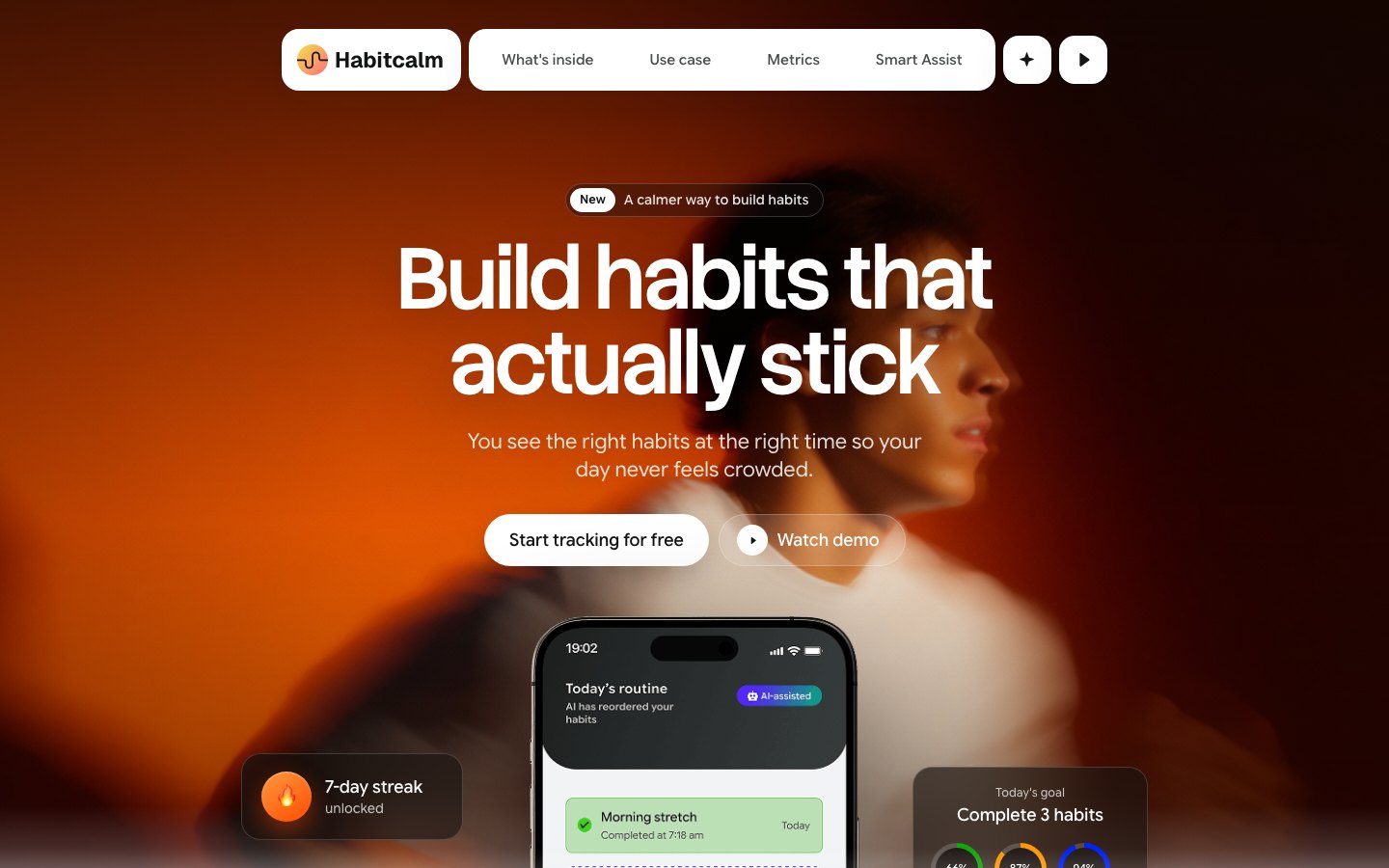
The hero is a warm portrait with a floating phone. The headline sits in the centre, under a small line, “A calmer way to build habits,” with two actions: “Start tracking for free” and “Watch demo.” A 7-day streak and today’s goal float beside the phone. Inside it, the routine is already sorted: morning stretch done at 7:18, water due at 9:10, a focus block this afternoon.
The navigation is a pill: What’s inside, Use case, Metrics, and Smart Assist. A play button opens a short tour of the same idea: only the habits that fit the current time of day, streaks that survive a real week, and nudges that stay gentle.
What’s inside is five cards. Streaks can take travel, a sick day, a weekend, a rest day, or a pause, so a 28-day run stays honest. The planner shows one slice of Tuesday 25 November, from a morning walk at 7:30 to planning tomorrow at 10. Stacks group the day into Morning Start, Focus Block, Weekend Prep, and Evening Reset. The week closes with a glance at workout, meditation, reading, and the sessions that landed. A reminder at 8:30 says “Take a 5-minute break,” with “I’m on it” or “Later.”
Further down, the page changes audience. Professionals, students, remote workers, and busy parents each get a line about their day. Then the proof: 62,000 check-ins last month, users in 32 countries, and short notes from people who kept a streak or a focus block. Smart Assist is the last product band. It suggests when to walk, reorders a busy day, points at what is slipping, and offers a way back after a miss.
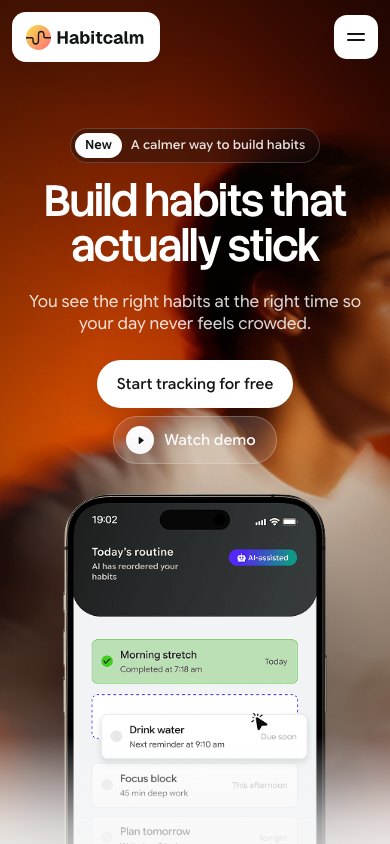
The phone layout stacks the badge, the headline, and the two actions, then lets the routine fill the width. The pill becomes a menu.
The result
Habitcalm has one page that explains the app the way the app explains a day: a few things at a time, in the order they matter. Desktop and phone share that sequence, so the routine still reads as the product when the screen gets small.