The project
Célavie is a small estate in Provence, open since 2016. The stay is the offer: suites, rooms, seasonal dining, wellness, a few local experiences, and space for a private gathering.
I designed and built the Célavie website. It is live at celavie.pages.dev.
The page is one visit. A guest moves from the house itself into how a day there feels, the six ways to spend it, a short gallery, guest words, the location, a journal, and a request to plan a stay.
The challenge
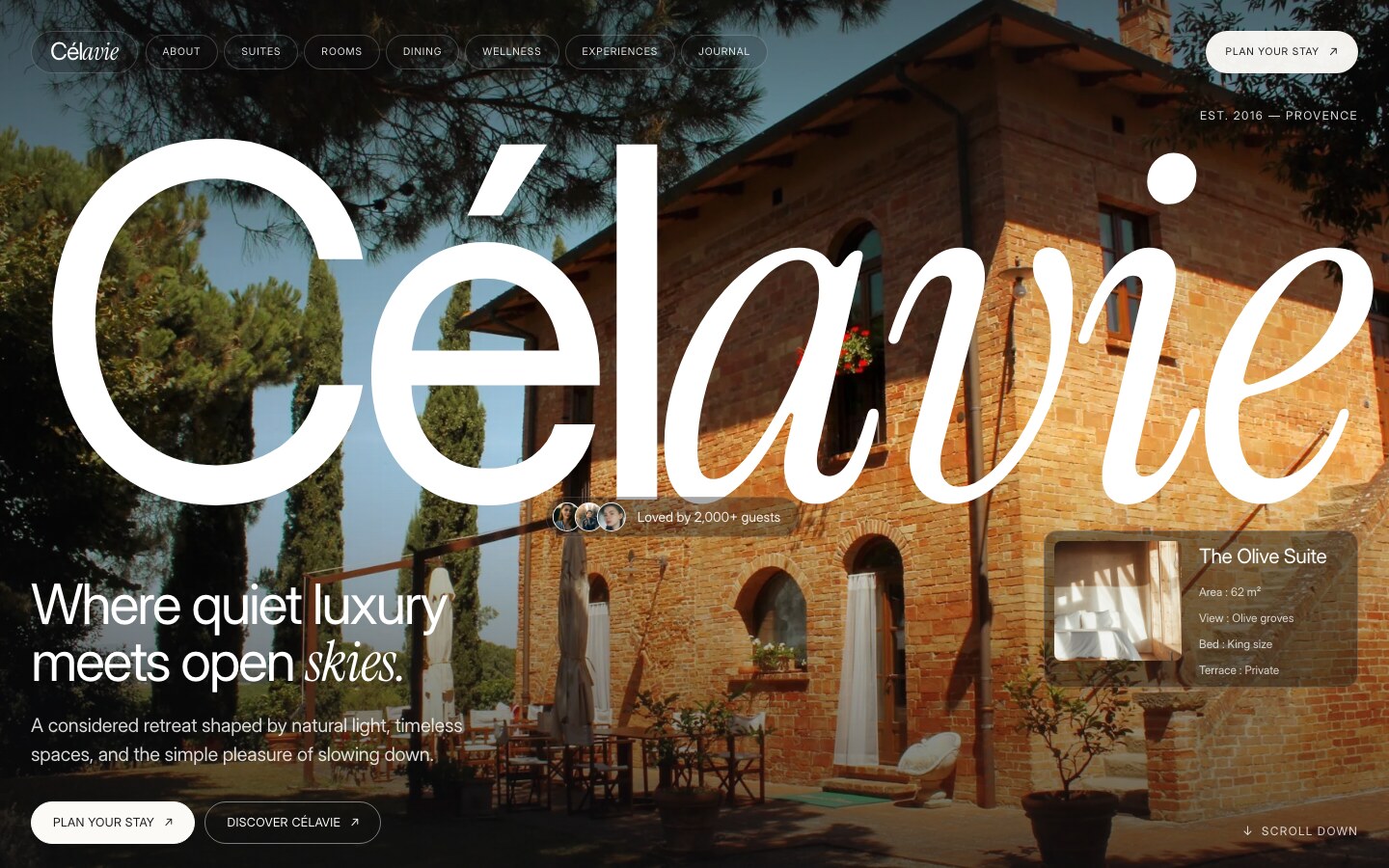
The brand is quiet. The first screen has to feel like arriving at the house, and the wordmark has to sit in the photograph.
The page is still long. It covers an introduction, six parts of the stay, four remembered moments, reviews, a map, three journal notes, and a way to write. A guest needs to know where they are. On a phone, seven navigation links cannot stay in the header, and “Plan your stay” has to remain easy to tap.
Design and development
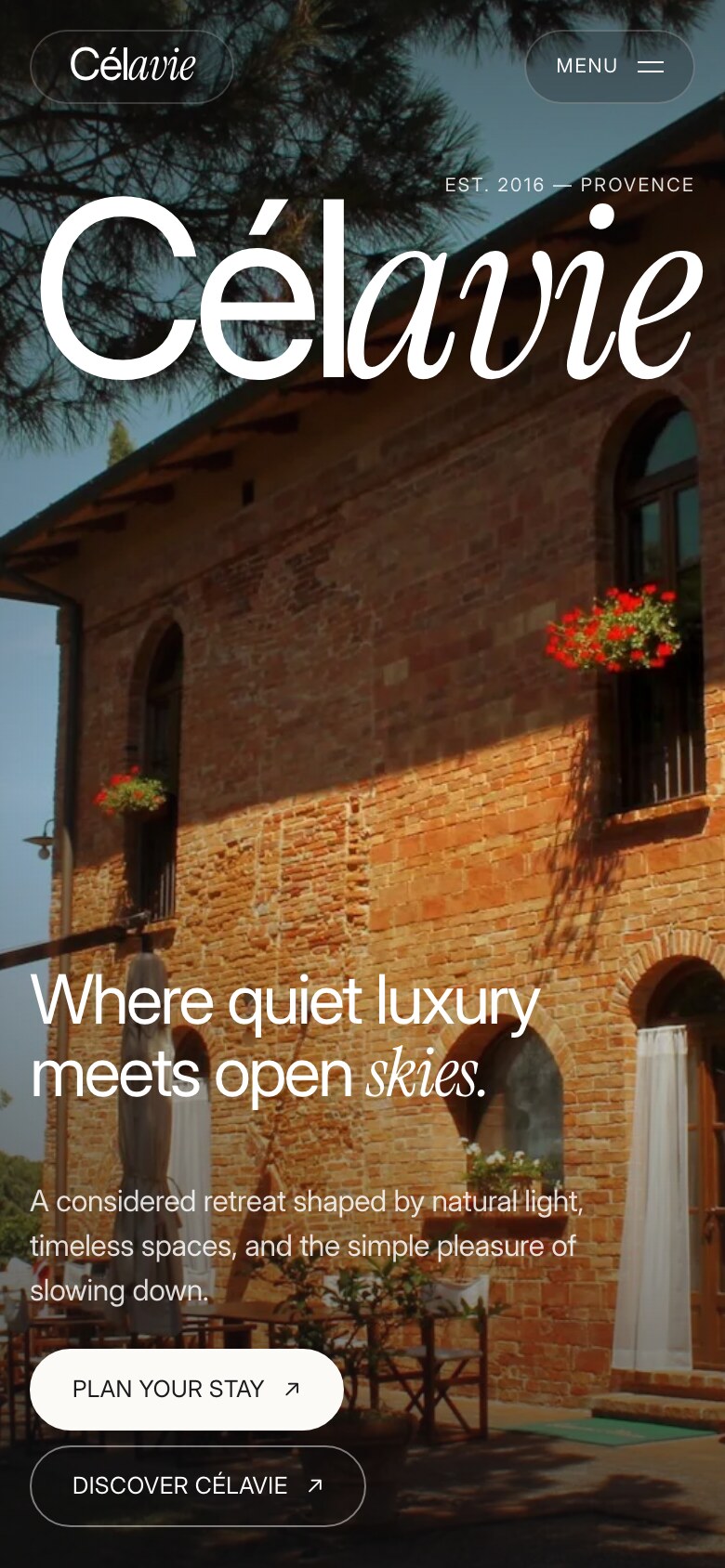
The hero is the brick house and the cypress trees. “Célavie” spans the photograph. Under it, “Where quiet luxury meets open skies,” with “Plan your stay” and “Discover Célavie.” A small note says the estate has been loved by more than 2,000 guests. On the right, a card introduces The Olive Suite: 62 square metres, a view of the olive groves, a king bed, and a private terrace. “Est. 2016 — Provence” sits in the corner.
The rest of the page is numbered, so a long scroll still has a rhythm. About is a softer way to stay. The experience is six bands: suites for long mornings, rooms for restful nights, seasonal dining, restorative wellness, curated experiences, and private gatherings. Then four short memories, from coffee on the terrace to evenings with the cicadas. Guest words open with a 4.9 from more than 600 reviews. The location gives the estate, the coordinates, and a drive of 45 minutes from Avignon. A journal holds three notes. The close is a request, with check-in, check-out, guests, and a choice of The Olive Suite, The Garden Room, The Terrace Suite, or The Estate House. No payment is taken on the page.
The phone layout keeps that order. The wordmark, the line, and the two actions stack over the same house. The links move into a menu.

The result
Célavie has one page for the stay: the house, the days, and a way to ask for dates. Desktop and phone share that sequence, so the estate still reads as a place when the screen gets small.